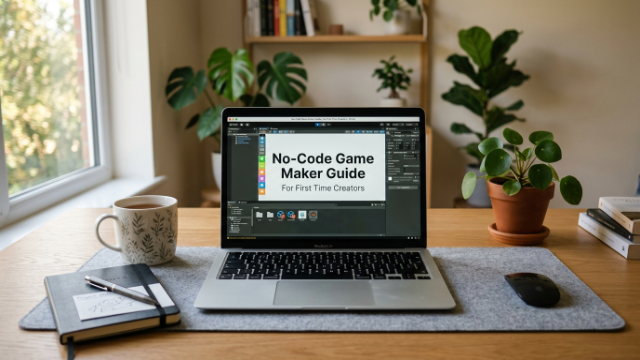
No-Code Game Maker Guide For First Time Creators
Do you want to make a game but feel stuck because you don’t know how to code? You may have a great concept in your head, but terms like programming, script-writing, and game engines may make it sound like it’s going to be a lot harder than it needs to be. Good news: Have you ever imagined making your own game but felt stuck because you don’t know how to code? You may have a great idea in your head, but words like programming, scripts and game engines just make it sound like it’s going to be a lot harder than it needs to be. With something like Astrocade, you can pick up game design in a simpler, less intimidating way.
The good news: You don’t have to be a programmer to make games. This tutorial will guide you through choosing tools, creating basic games, implementing dazzling effects, and testing your games. When we’re done you will know how to take your idea and make a game from it using Astrocade.
Choose Your Game
What type of game are you trying to make before you open any game creation software? Begin with a simple concept, maybe a platformer, puzzle game, racing game or simple adventure. A mini project is simpler to end and gives you valuable experience.
Consider your player, goal, and primary challenge.For example, maybe the player is a character who collects coins and avoids obstacles. Breaking down these concepts will enable you to concentrate on the top priority aspects of your no code game creator project.U
See also: Why Do Surf Life Savers Wear Coloured Caps and Vests?
Pick Easy Tools
The first project can be a nightmare, but the right tool can make it a dream. Select one that has visual controls, drag-and-drop, pre-made assets and simple menus. With these features, you can develop a game without having to write complex codes.
Don’t forget to add your favorite game type to the app, too. A few engines are geared towards 2D games, others have tools for 3D games. Choose one that’s “newbie-friendly” so you can focus more on making your game instead of learning confusing tools.
Build Game Basics
Once you have your tool, start with the basic building blocks of your game. Create a player character, background, objects, levels, and a well-defined goal. You Don’t always Need to Create All these things From Scratch You can sometimes get these assets visually.
It’s then possible to build simple game play mechanisms. Specify what takes place when the player pulls off a move, collects an item, hits a target or a barrier. Test along the way so minor problems don’t get out of hand.
Add Fun Features
Once you have a minimum working version of your game, start making it more fun by adding more features. You could add sound effects, music, animations, points and rewards led new levels or levels up in any way. These little tweaks and changes can really add up, and make even the most minimal game feel really polished.
But don’t put everything but the kitchen sink in. Choose a few features that play well together and express the core of your idea. E.g., good sounds and level progression are more important for a puzzle game than complex character animation.
Test And Share
Testing is a necessary part of game design. Playpg Download your game a lot, and watch for controls that are confusing, objects that are broken, levels that are too hard, or anything else that looks like a mistake. Also have your friends and family test it, they might notice things you missed.
When you’re ready and it’s all working, build your game for distribution. Depending on the platform, after your creation is finished you can either publish it online or share it with other users. Good praise is good because it makes you feel more confident, and tells you what you’ve done right for your next project.”
Conclusion
Making a game for the first time can be intimidating particularly if you don’t code. The right tools can simplify the process and let you focus on your story, characters, levels, and gameplay. Begin small, learn as you go, and don’t sweat making your first project a masterpiece.
A no-code game maker gives novices a realistic way to get into game development without spending a long time learning to program first. And Whether you want to do a really simple game like Jump For Millions, or even just a game, pick a simple concept, design the mechanics, add a few features for fun, and test, test, test. More than anything, complete your first game and use what you learn to make the next one better and the next one better after that.
FAQs
Can beginners make games without coding?
Yes. Many contemporary game engines come with visual programming tools that enable novices to make games without scripting in a traditional sense. Working with menus, templates and drag and drop you can create simple projects.
What game should I make first?
Begin with an easy and simple game. A more simple platform game or puzzle game or even a coin-collecting game could be a good place to start to get to grips with movement, objectives, levels, and controls for players.
Do no-code games look professional?
They can. The tool you use, the artwork, sounds and level design of your game and how much you sweat the details all contribute to how you’re perceived.The final result of the game really depends on you. Properly planned and tested a simple project can look like a million dollars.
Do I need expensive software?
No amount is too little. Certain game development platforms do offer free plans and more options for beginners. Start out with an inexpensive tool and only upgrade when you need more features to complete your project.
How long does it take to make a game?
The duration is determined by the scale and intricacies of a game. A modest ample project can be finished in days or weeks, but a large game will require substantially more time. Beginning with a small lets you get finished faster and learn vital skills.